
Visitor Centre for the Arthur B. McDonald Canadian Astroparticle Physics Research Institute
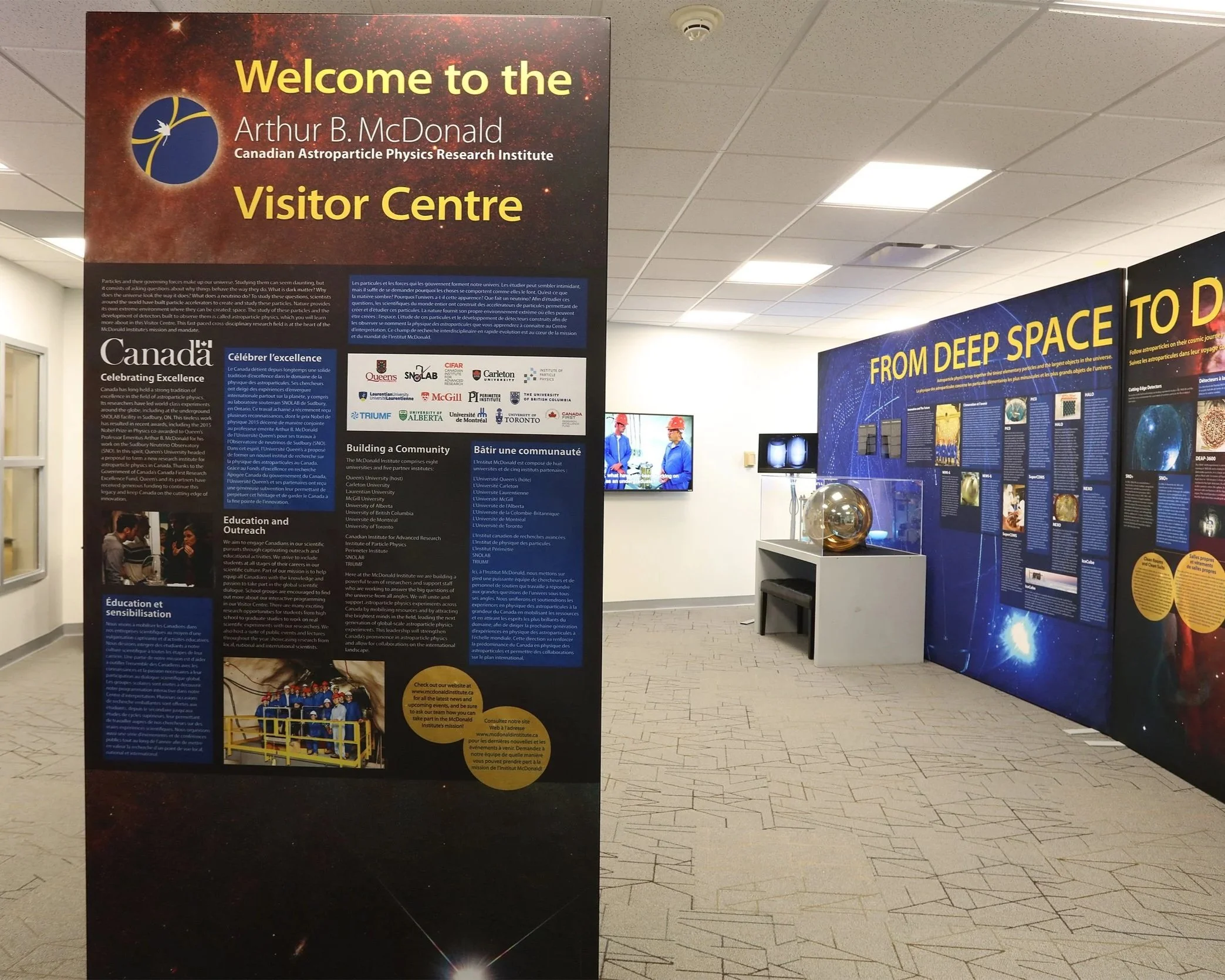
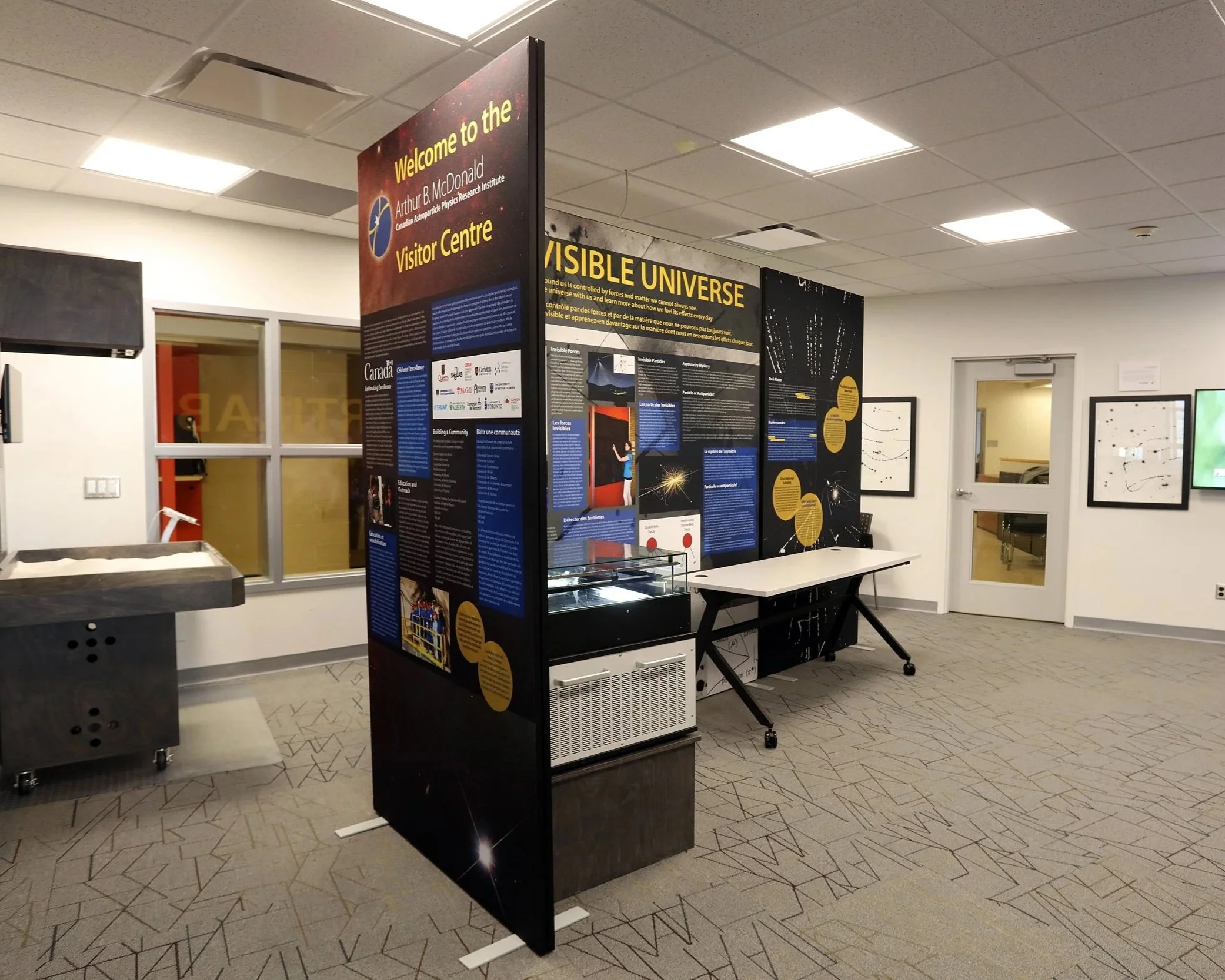
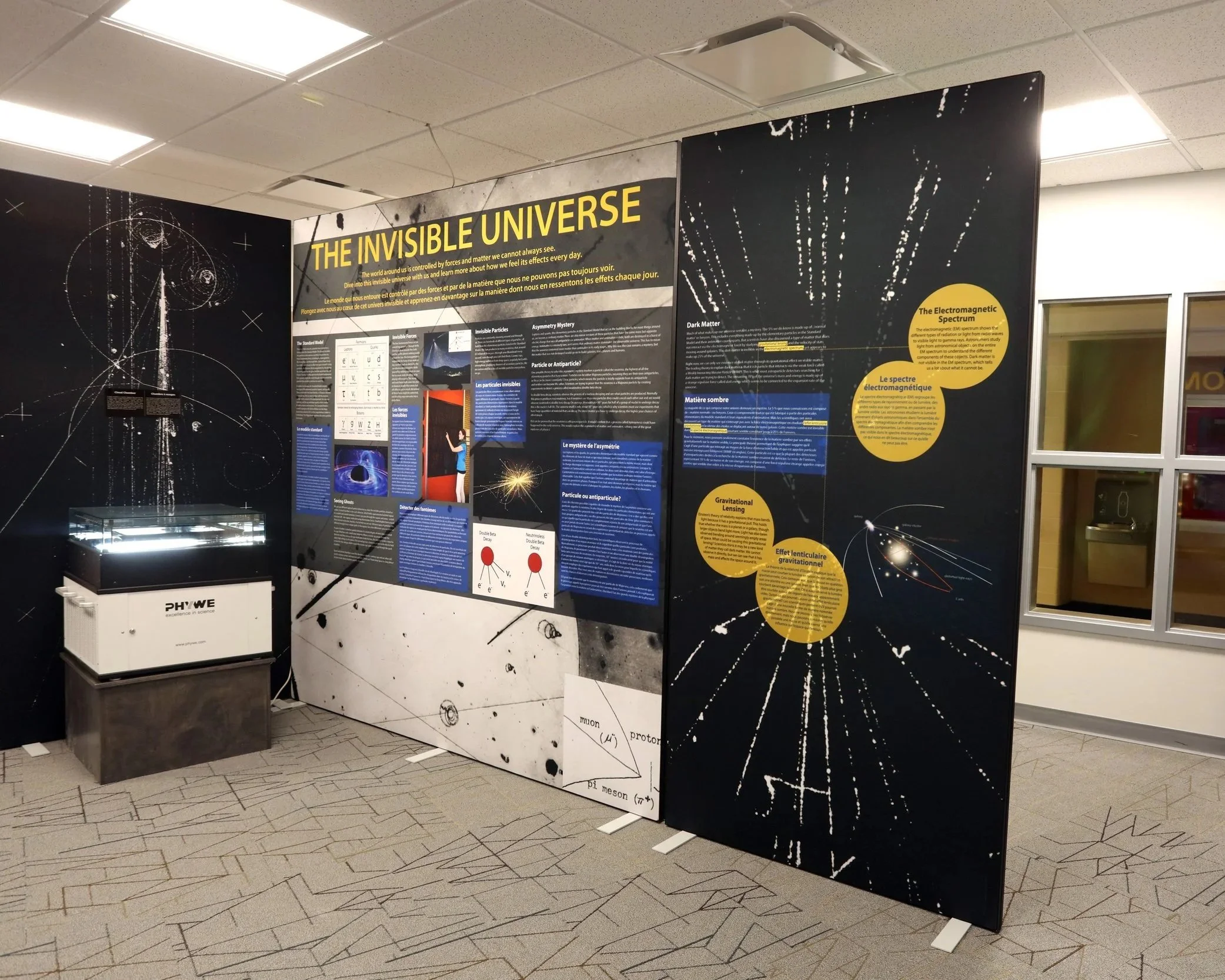
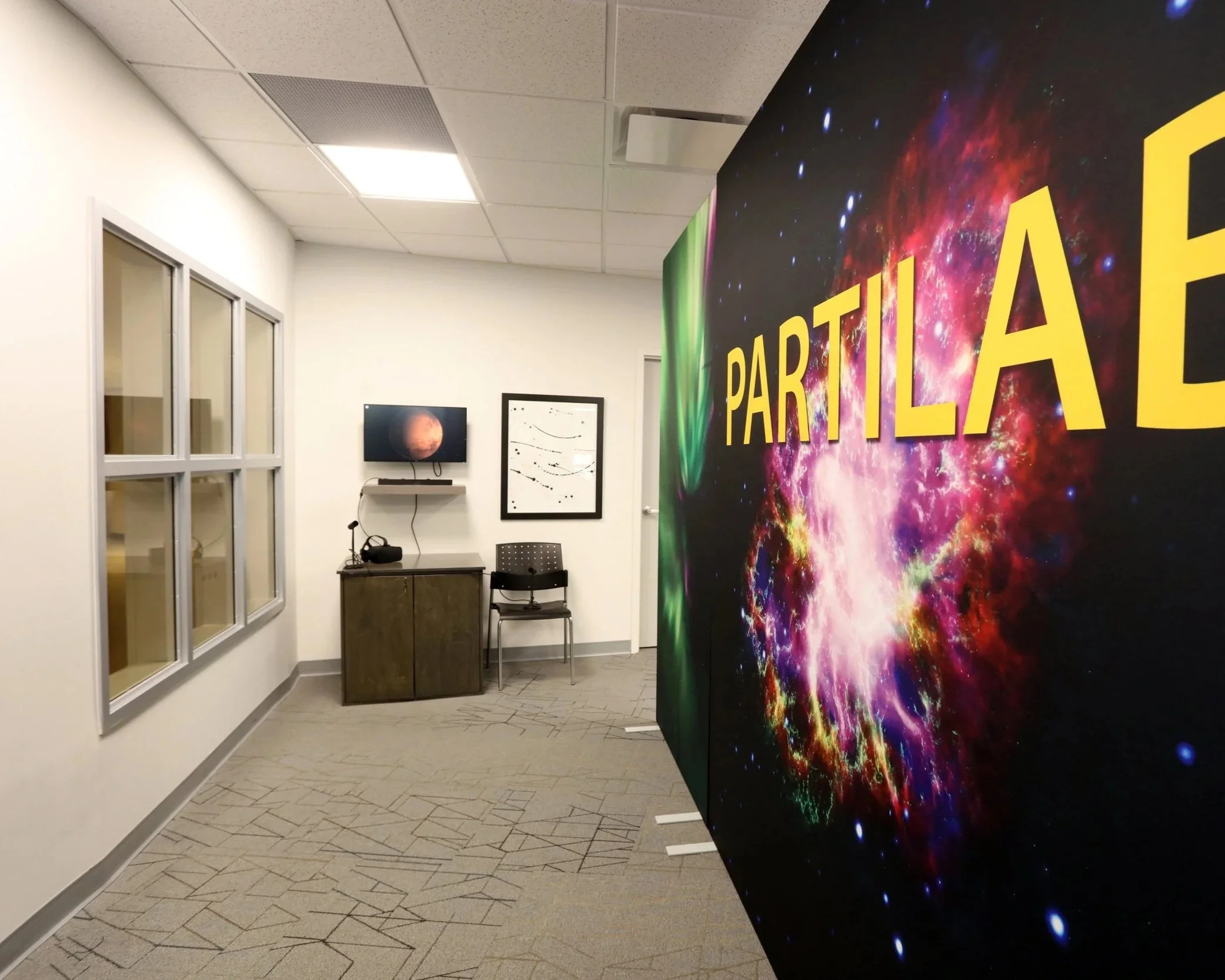
For my internship in Algonquin’s Applied Museum Studies program in 2018 I became the Museum Studies Intern at the Arthur B. McDonald Canadian Astroparticle Physics Research Institute. I created and developed a visitor centre containing two exhibits, an educational programming space with content for ages 8 and up, and multimedia elements in five months start to finish in a multifunctional space with multiple stakeholders. Below are screenshots of the original design for the project, a sample of the exhibit text, photos of the finished Visitor Centre at Queen’s University, and a sample of the evaluation materials.
Visitor Centre Layout Design Process:
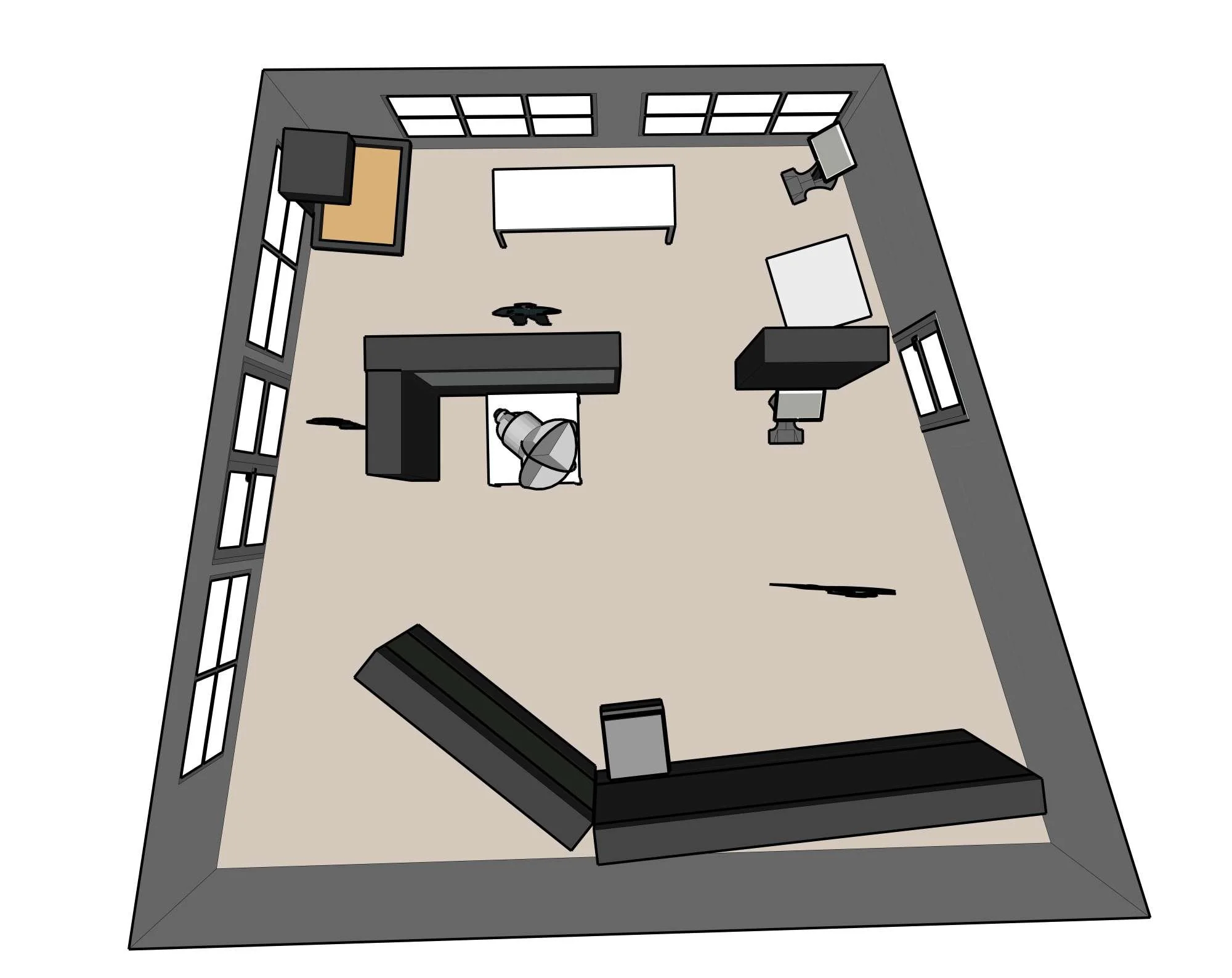
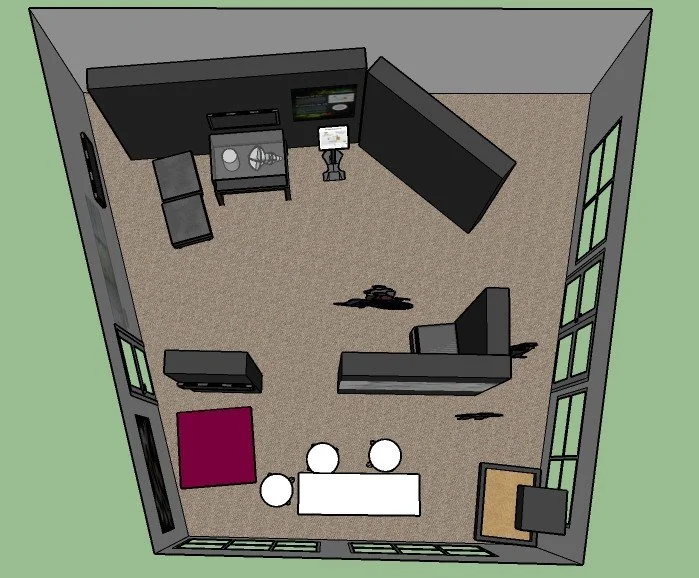
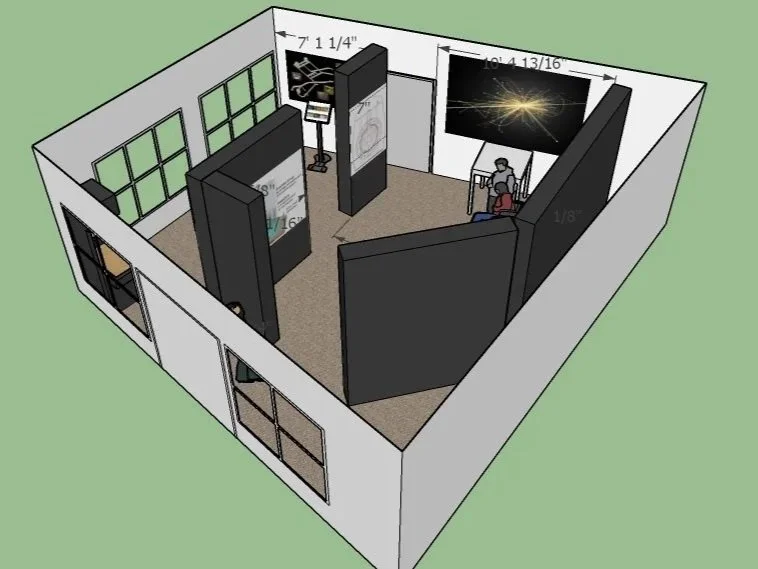
Exhibit Text Sample:
The Electromagnetic Spectrum
The electromagnetic (EM) spectrum shows the different types of radiation or light from radio waves to visible light to gamma rays. Astronomers study light from astronomical objects on the entire EM spectrum to understand the different parts of these objects. Dark matter is not visible in the EM spectrum, which tells us a lot about what it cannot be.
Gravitational Lensing
Einstein’s theory of relativity explains that mass bends light because it has gravitational pull. This holds true whether the mass is a planet or a galaxy, though larger objects bend light more. Light has also been observed bending around seemingly empty areas of space. What could be causing this gravitational lensing? Scientists think it may be a new kind of matter they call dark matter. We cannot observe it directly, but we can see that it has mass and affects the space around it.
Light Years
Measuring distances on Earth is easy, but how do you measure the distance between planets or galaxies? To solve this issue, scientists have come up with the light year which is defined as the distance it takes for light to travel in a straight line in one year. For context, it takes light eight minutes to reach Earth from the Sun, but our galaxy is 100 000 light years across! When describing the paths of neutrinos and dark matter particles, it is much easier to use such a large unit of distance.
The Finished Visitor Centre at Stirling Hall, Queen’s University:
Evaluation Materials Sample, From General Feedback Survey:
Thank you for visiting the Art B. MacDonald Research Institute Visitor Centre! To further improve visitor experience, we are seeking feedback from our visitors. Your answers are completely confidential and will only be used to further improve our visitor centre.
1. How did you find out about our visitor centre?
□ Through social media, please specify:_______________
□ Through a friend
□ From the Research Institute’s website
□ From the Queen’s University website
□ Other, please specify:___________________
2. Did you find it easy to locate our visitor centre?
□ Yes
□ No
3. Did you find the layout of the exhibits within the visitor centre easy to follow?
□ Yes
□ No
4. On a scale of 1 to 5, 1 being “couldn’t understand at all” and 5 being “easy to understand,” how easy did you find it to understand the information in the visitor centre?
1 2 3 4 5
5. Did you experience any accessibility issues in our visitor centre today? If yes, please describe them below:
________________________________________________________________________________________________________________________________________________________________________________________________________________________________________________________________________________________________________________________________
Thank you for your time! Have a nice day!